AI & Technology
Start Small with AI
A simple way to turn a vague idea into something small enough to test with help from AI.
Summary
At a glance
- Write one sentence about whose problem should get easier before listing features.
- Give AI reviewable tasks such as research, drafting, and comparison.
- Use the first result to find the next question, not to pretend the project is finished.
When I get an idea, I tend to make it too big. I name it, add features, and imagine users who have not arrived yet. Soon I am tired before I have made anything.
AI can make this worse. “Build me a good service” produces plenty of polished words, but not much I can test. Now I start with one small result.
Put the problem in one sentence
I describe the person and the problem before the features.
Help a caregiver find a free local activity for this weekend in under three minutes.
That sentence gives me a person, a situation, and a result. “Build a local information platform” sounds impressive, but it is too wide to guide the first step.
I ask three questions:
- Who will use it?
- What is difficult for them now?
- What small change would count as progress this week?
Give AI work I can check
I keep the decisions and give AI clear tasks.
- Find common patterns in ten public examples.
- Draft questions for a user conversation.
- Compare three ways to arrange one screen.
- Mark vague wording and missing conditions.
I check the facts and sources myself. Asking AI to mark uncertain points also makes review easier.
Use the first result to find the next question
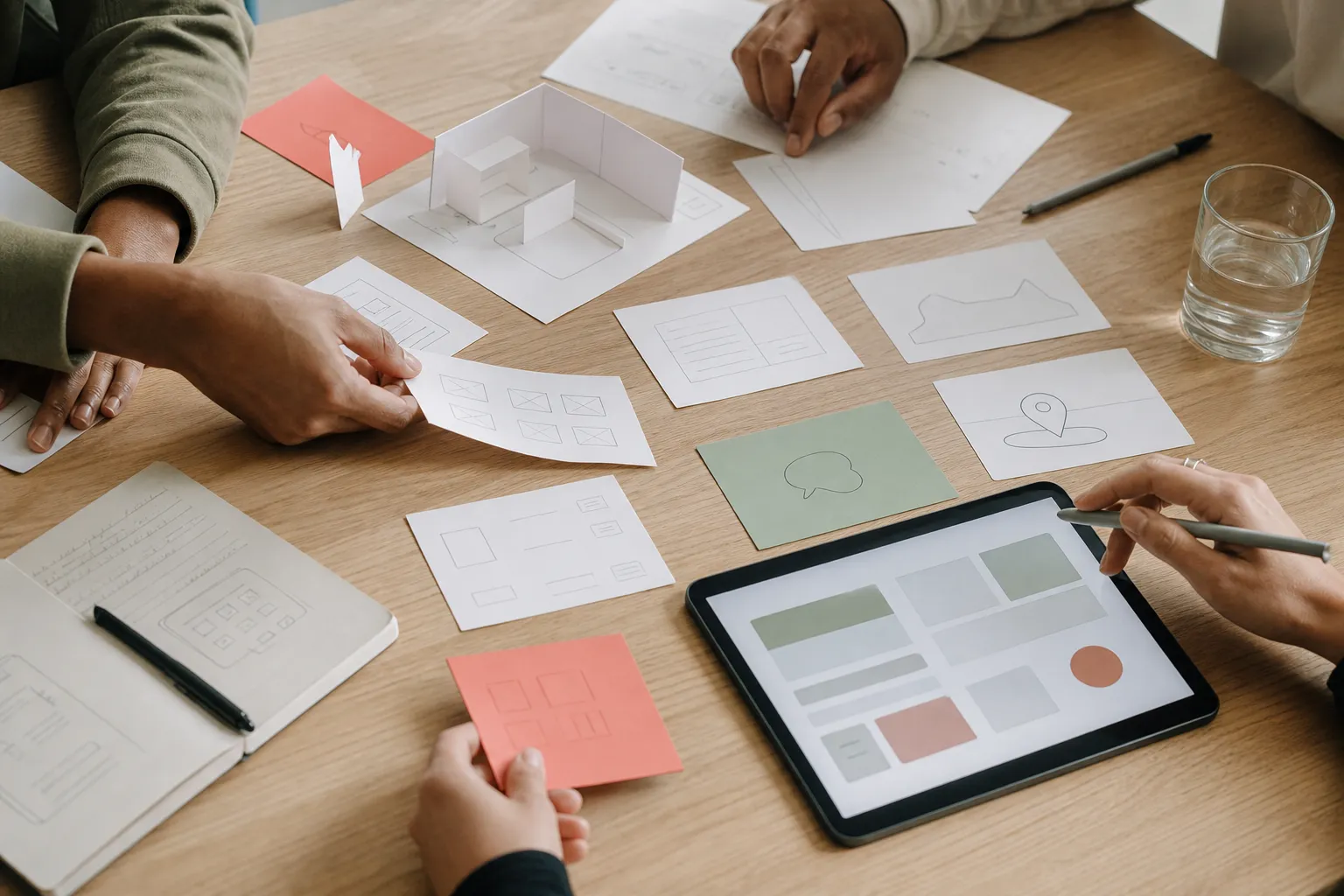
The first result can be one screen or a paper sketch. It does not need to look finished. It needs to show where someone pauses or gets confused.
I check four things:
- Can a person understand it without an explanation?
- Do they use the feature I thought was essential?
- Are public and private information clearly separated?
- Is the next thing to fix obvious?
I also leave a short note about the first idea, why it changed, and what I still do not know. AI can speed up a draft, but it cannot take over the direction or the responsibility.
Making something small today has taught me more than postponing a grand plan. That is the rule I keep returning to when I work with AI.
Leaving a reaction may store a random identifier in this browser to prevent duplicates.