From One Question to a Library: What I Want to Find Again in Ask
Ask began with two-choice questions. This build log follows the move toward saving useful links, finding them again, and being clear about what votes and curation cannot prove.
Summary
At a glance
- Ask began with the idea that a brief choice might be an easier way to encounter what people think than asking for a long post.
- A discovered link goes to a personal library first; sharing it publicly is a separate choice.
- Polls reflect participating users, not everyone, and curation does not verify a link’s claims.
This is a personal HaruSpace Lab build log. A poll records the choices of people who participated; it does not represent everyone. Collecting links does not automatically verify their claims.
I did not set out to build a community from day one. I wondered whether it might be easier to invite people into a conversation with one question and two choices than to ask them to write a long post or explain themselves in a comment.
Read a question, think for a moment, choose one. It takes only a few seconds. But that choice cannot fully explain a person or speak for society as a whole. It can show which choices gathered around a particular question. Ask’s first experiment was not to judge what people think, but to share a question and look carefully at the responses.
A short question still needs careful interpretation
Two options lower the effort of participating. They do not make a result automatically accurate. The outcome can change with who saw the question, how many people answered, and how the wording framed the choice.
That is why I do not want to turn a poll ratio into “everyone thinks this.” The number in Ask is the result from people who actually participated in that question. It can be a prompt for further thought, but it should not be presented as a representative survey or a definitive answer.
Good discoveries kept getting scattered
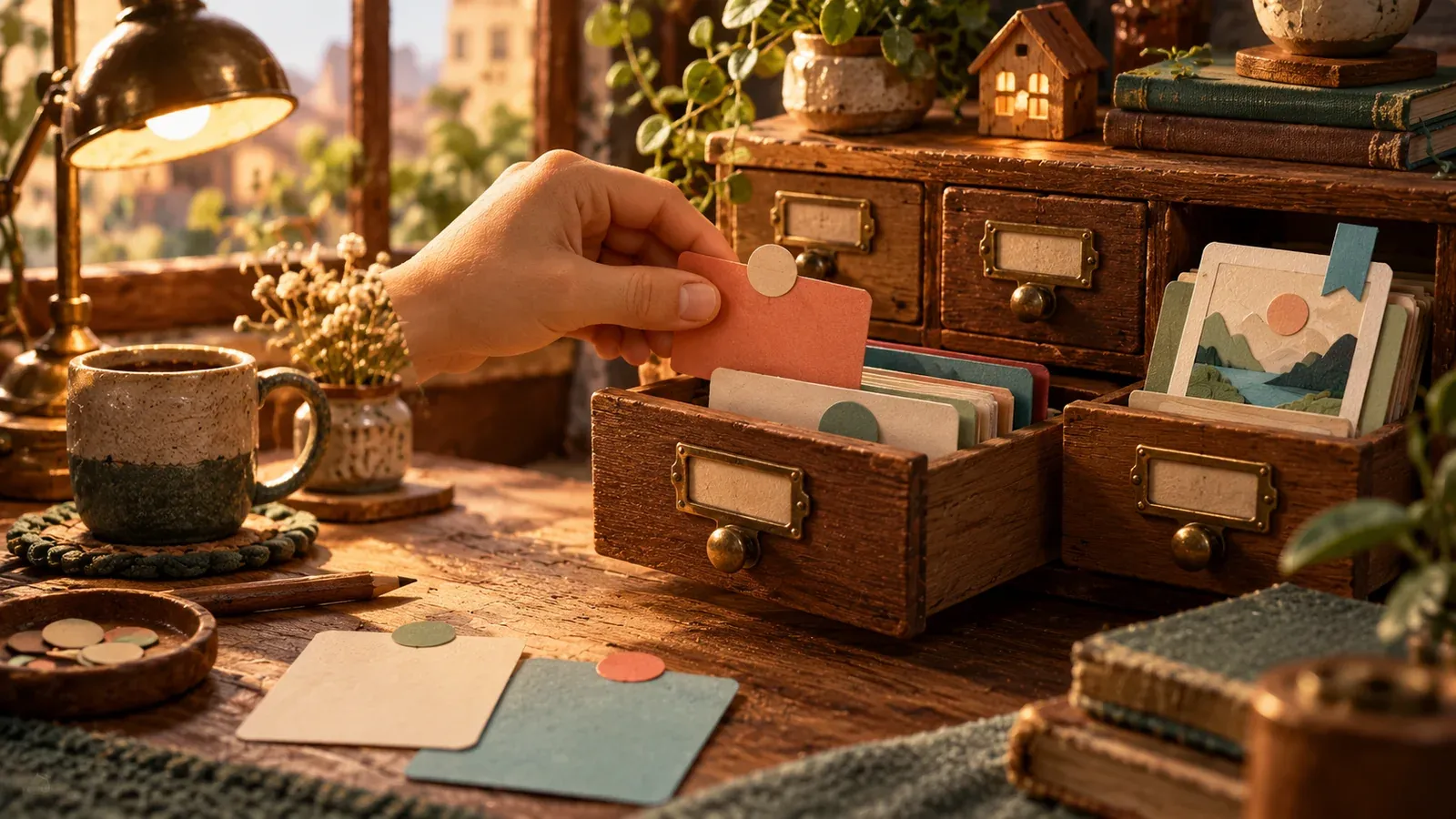
While building, I looked for material about AI, development, education, and other topics. Finding a good article or video was not the hard part; finding it again later often was. I sent links to myself in messages, saved them in browser bookmarks, and pasted them into notes. They ended up everywhere.
Then the question changed. What if Ask could be a place not only to see people’s choices, but also to keep what I found before it disappeared into another tab or note?
The link-saving flow starts in a personal space. Saving a link does not automatically add it to a public collection. I choose separately if and when to organize it for other people. Discovering something and publishing it are different actions.
Collect useful things without claiming to decide what is true
One person may be good at finding development material; another may know what content a family enjoys. If each person leaves one link they found worthwhile, with a little context, someone else might save it or add a perspective. That can create discoveries I would not have found alone.
The collaboration I hope for is not some grand collective intelligence. It is the small act of saying, “This helped me,” and giving a reason. That note may give the next person a place to start. But a link does not become true just because several people saved it or marked it useful. Its context and original source still matter.
Coco can reflect choices a person intentionally leaves
I do not want Coco beside Ask because it can decide everything on someone’s behalf. I imagine a small helper that can bring back an interest or library the person deliberately saved and ask, “You kept this earlier. Would you like to look again?”
That memory should stay within the scope the person chose. I do not want a system to quietly collect every click or conversation and turn it into a judgment about someone’s personality. A saved link is not a final statement of identity or taste; sometimes it is just something a person was curious about once. Coco’s role is not to define me, but to offer a chance to revisit a small part of what I chose to keep.
I still do not know whether the world needs Ask
The internet already has search engines, video platforms, bookmarks, communities, and AI. It is hard to say that the world must have one more service. I also do not think Ask only matters if it becomes a large platform.
If someone pauses over a question, discovers something through another person’s link, or opens a saved item again later, that may be enough of a small role. Whether that actually happens is something I still need to learn. I do not want to present an idea and an untested hope as if they were the same thing.
Coco Room is a separate experiment in making a small place for children and families to spend time and create together. I wrote about its beginning and the boundaries I want to protect in A Small Room We Made Together: Why I Started Coco Room.
Answering one question or saving one link is a small act. Ask is still an experiment in what those acts might become when they accumulate. Rather than promising to organize the whole internet, I want to start with helping people keep a few worthwhile discoveries from getting lost.
Leaving a reaction may store a random identifier in this browser to prevent duplicates.