Daily Issues
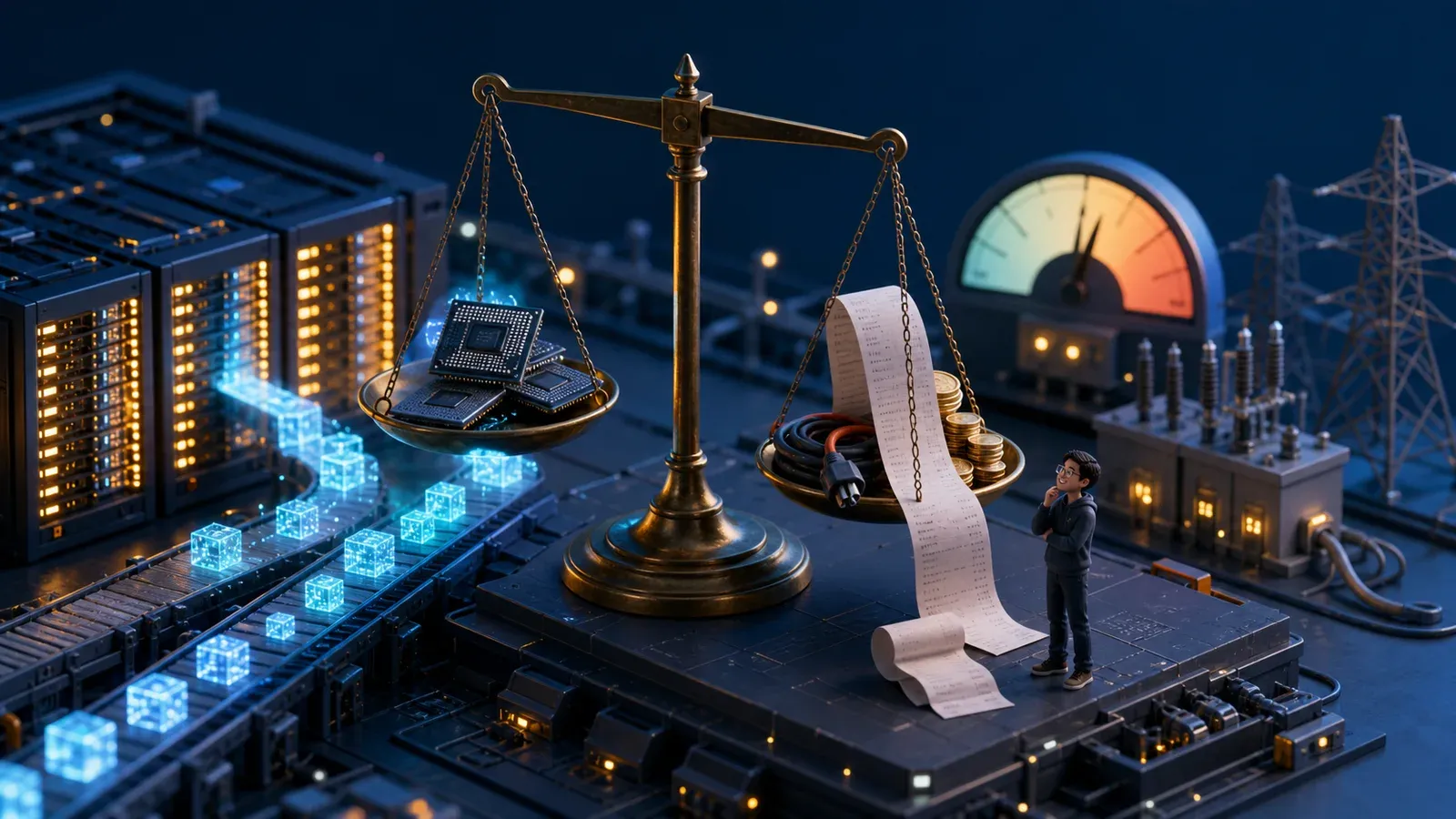
Rates and capital brought calculators to the AI celebration
My August 28 briefing on Korea's rate hike, Nvidia's post-earnings rally, AI financing and agent review, China's electronics and humanoids, and the U.S. goods deficit

Summary
At a glance
- The Bank of Korea raised its base rate to 3.00% and lifted its growth forecast to 3.3%, showing how the semiconductor boom is reaching monetary policy.
- Markets cheered Nvidia's results, while the pause in some AI-cloud financing deals exposed the capital and regulatory edge of the boom.
- Agent review and interchangeable harnesses advanced, while China's electronics and humanoid data showed that production scale and field performance are different questions.
The provided briefing is a personal morning digest that AI prepares around subjects I follow. I kept only facts I could recheck in official releases or primary reporting.
Starting today, I have separated blockchain and crypto developments into a dedicated blockchain article. Investment comments here are my market notes, not recommendations to buy or sell anything.
Information cutoff: the morning of August 28, 2026, Korea time, including the August 27 U.S. close.
What caught my attention today was not simply that AI is selling well. Nvidia rallied sharply after earnings, and the Bank of Korea raised rates again. One agent can now review a pull request created by another, while humanoids still struggle to match people and conventional industrial robots on the factory floor.
Celebration and reality arrived together. I am recording this as the day the AI scorecard was placed next to the bill for rates, capital, and operational responsibility.
1. Korea’s 3.00% rate showed the other side of the chip boom
The Bank of Korea raised its base rate from 2.75% to 3.00% on August 27, the second consecutive increase. Six members supported the hike and one preferred no change. The Bank also raised its 2026 growth forecast from 2.6% in May to 3.3%, while forecasting 2.7% consumer inflation.
Exports and investment remain strong and consumption is recovering, but inflation may stay above target for some time. Seoul-area housing prices and household lending are additional concerns. The Bank said it would decide the timing and pace of any further increases by watching inflation, growth, and financial stability, so I have not treated 3.25% or 3.50% as a predetermined destination.
Rates are not remote news for a developer. When a company buys GPUs or builds servers, the price of borrowed money belongs beside the hardware price. Strong semiconductor exports can lift growth and simultaneously delay lower rates. It feels like receiving a good report card and discovering that the first reward is more study time.
Sources: Bank of Korea monetary policy decision, Bank of Korea August outlook summary
2. Nvidia’s 8.7% gain pushed AI-demand worries aside for a day
Nvidia reported fiscal 2027 second-quarter revenue of $96.2 billion, up 106% from a year earlier. Management projected roughly 70% revenue growth for the following fiscal year. The stock rose 8.7% the next day, while the S&P 500 gained 0.7% and the Nasdaq 1.6%.
The market temporarily relaxed its fear that AI capital spending had already peaked. I would not treat one strong session as a permanent warranty for the whole industry. Nvidia also described a supply-constrained outlook, and actual service cost depends on memory, networking, power, and utilization as much as on the GPU.
I therefore want dashboards that show task cost, memory pressure, retries, and completion—not just accelerator count. A warehouse full of engines does not impress a customer whose delivery is still late.
Sources: Nvidia’s official fiscal 2027 Q2 results, AP on the August 27 market close
3. Some of Nvidia’s AI-cloud financing deals paused
Reuters relayed a Wall Street Journal report that Nvidia paused some deals in a new program offering credit support to AI-cloud companies in exchange for a share of revenue from supported capacity. Nvidia said the business model itself remains in place and continues to evolve with demand.
The important word is some. It would be inaccurate to call this the end of the whole program, but it would also be too narrow to describe it as a simple chip sale. When a dominant supplier becomes involved in customer financing and capacity distribution, supply, finance, and sales begin to overlap. Antitrust and fairness questions naturally follow.
When evaluating a neocloud, I would look beyond the GPU specification to financing structure and customer concentration. Servers may be bolted to racks, but contract terms travel remarkably well.
Source: Reuters report on Nvidia’s financing program
4. AI-generated pull requests can receive a separate AI review
GitHub said Copilot Code Review now covers automatically requested reviews on bot-authored pull requests, including those from Copilot cloud agent, and very large pull requests. Developers can also record a reason when resolving a Copilot review comment.
I do not read this as AI writes → AI reviews → automatic merge. Separating the authoring and reviewing agents may reduce one model’s self-confirmation, but both may still share the same false premise. Tests and a human approval boundary remain necessary.
Resolution reasons can help teams measure false positives and repeated comments. Clicking “resolve” is easy; an organization’s memory of why it did so often leaves work earlier than everyone else.
Source: GitHub Copilot Code Review update
5. Coding agents are becoming replaceable runtime components
Vercel released a Cursor adapter for the AI SDK harness layer. It places Cursor and other agent harnesses behind the same HarnessAgent interface. A harness covers more than model calls: it can include sessions, sandboxes, permissions, compaction, and sub-agents.
After model abstraction comes agent-runtime abstraction. I would rather put a small runtime boundary with an explicit permission and task contract in product code than call one vendor’s agent by name everywhere.
Replaceable does not mean equivalent. File-editing scope, approval behavior, and session recovery can still differ. An adapter may make the plug fit; it does not guarantee identical voltage.
Sources: Vercel’s Cursor harness adapter, Vercel’s HarnessAgent introduction
6. China’s electronics numbers were strong, but the wider economy had different temperatures
China’s National Bureau of Statistics reported that profits at large industrial firms rose 17.6% in January–July, with July alone up 11.2%. Profits in computer, communications, and electronic-equipment manufacturing rose 105%. Optical-fiber manufacturing increased 468.4%, optical cable 62.6%, and communications-system equipment 55.0%.
Automotive profits, however, fell 20.4%, while non-metal mineral products dropped 48.2%. I read this as industrial divergence, not a declaration that the entire economy has recovered. AI demand reaches optics, servers, and materials, but it cannot hide every weakness in domestic demand.
Developers can miss the next bottleneck by watching GPU prices alone. Networking, storage, power, and cooling often complain first. A data center may have “center” in its name, but its costs arrive from every direction.
Sources: China NBS industrial-profit release, NBS interpretation
7. China can build many humanoids, but they are still learning the job
A Reuters investigation said Chinese companies accounted for roughly 95% of about 20,000 humanoids shipped worldwide in 2025, with more than 150 companies in the sector. The production base is formidable, yet industry sources described failure rates rising when position, lighting, or object angle changes.
Even where Xiaomi EV says its factory is 91% automated, more than 700 conventional industrial robots perform the core work. Production volume and general-purpose competence are different metrics. A dancing humanoid makes a great video, but a factory cares whether it can pick the same part correctly on Monday morning.
I would track task completion, human interventions, recovery, uptime, and success after environmental change. People also perform worse on Mondays, but humanoid pitch decks have not yet added a Monday-effect row.
Source: Reuters investigation republished by The Business Standard
8. AI equipment is part of a much larger U.S. goods bill
The U.S. Census Bureau’s July advance indicators put the goods trade deficit at $118.8 billion, $17.4 billion wider than in June. Goods exports fell $6.0 billion and imports rose $11.4 billion.
The provided briefing connected a rise in capital-goods imports to AI equipment through Reuters commentary. The official table alone does not justify calling the entire increase “AI.” What I can say safely is that a U.S.-based data center still depends on global equipment, components, shipping, and trade costs.
Cloud dashboards show a region selector. Underneath it are ships, ports, and tariffs. Digital-service invoices catch more sea air than they appear to.
Sources: U.S. Census Bureau July 2026 advance indicators, Reuters on U.S. claims and trade
My takeaway today
AI demand proved its strength in earnings and market prices. Yet Korea’s back-to-back rate hike, Nvidia’s paused financing deals, the field limits of humanoids, and the U.S. trade deficit all add the same sentence: strong demand and cheap, safe operations are separate problems.
The development loop is changing too. One agent writes, another reviews, and the harness can be swapped. Responsibility does not become a plugin. Tests, permissions, costs, and human approval records need to become more visible, not less.
My four rules today are simple:
- Measure AI by completion and cost, not code volume.
- Evaluate suppliers through financing and contracts as well as benchmarks.
- Use automated review, but keep final merge responsibility human.
- Separate production volume from real field utilization.
The market set off fireworks while rates turned on a calculator. Neither reaction is necessarily wrong. I simply do not want the sound of the calculator buttons to disappear under the celebration.
These investment comments are personal market notes, not advice to buy or sell any asset. Every investment decision and its consequences remain the investor’s responsibility.
Leaving a reaction may store a random identifier in this browser to prevent duplicates.