Daily Issues
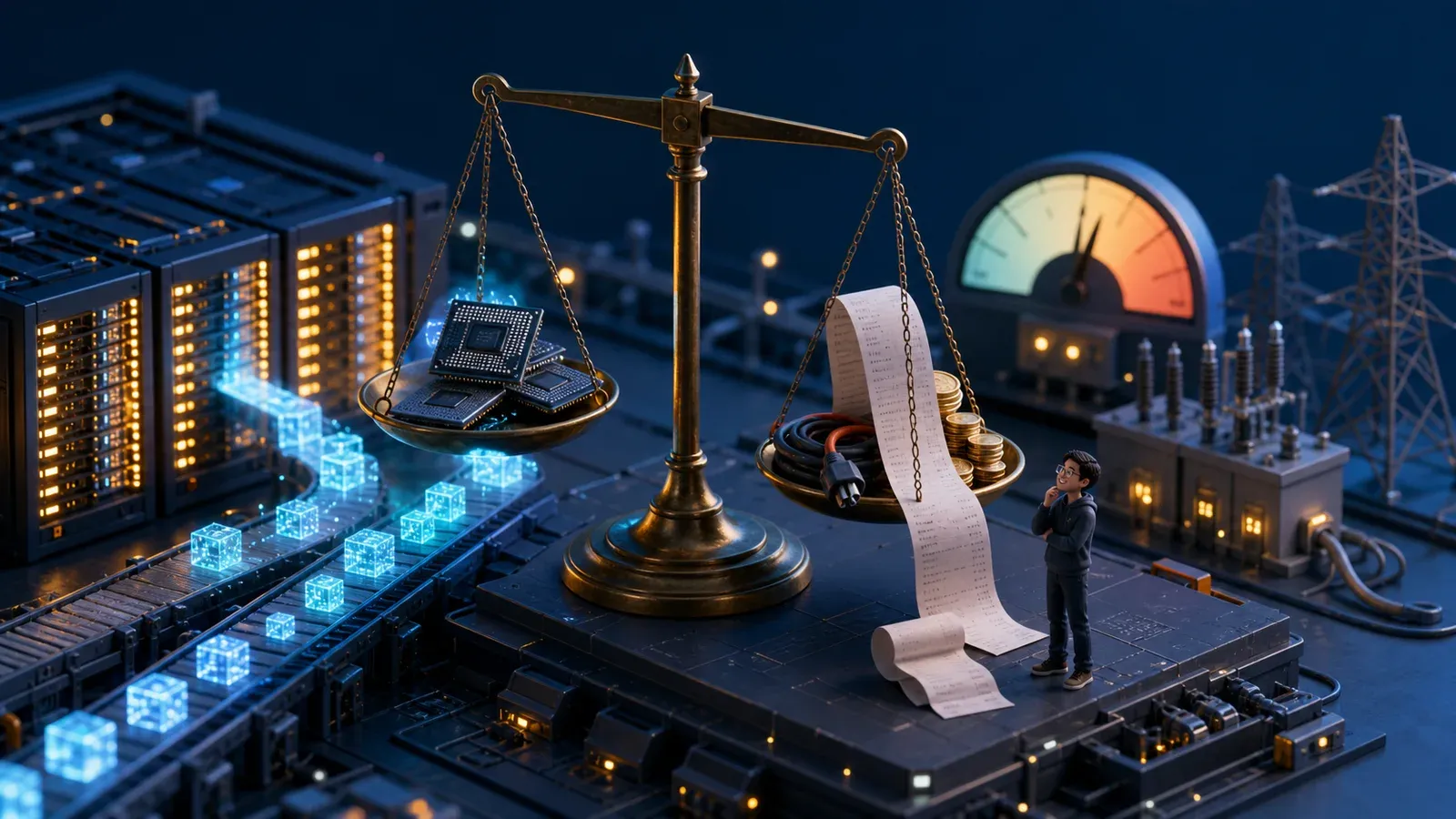
AI Sold Well, and the Bill Followed
An accessible August 27 briefing on Nvidia's record quarter, the cost of AI compute, agent standards, sticky inflation, and the Bank of Korea's rate increase
Summary
At a glance
- Nvidia's data-center revenue rose 117%, confirming demand, while Anthropic's reported compute deal showed how quickly the bill supporting that demand is growing.
- The Assistants API sunset and the WebMCP experiment point from vendor-specific objects toward portable tools and protocols.
- Sticky U.S. inflation and the Bank of Korea's rate increase show that strong AI investment does not automatically make money cheaper.
The supplied briefing is a personal morning digest I use to keep up with the areas I follow. For this public post, I kept only facts I could verify through official releases and original reporting.
Investment comments are notes on how I read the market, not recommendations to buy or sell any asset.
Information cutoff: August 27, 2026, 11:30 a.m. Korea Standard Time
Today’s numbers pointed in one direction: AI sells, and it sells extremely well. Nvidia’s data-center revenue grew 117% in a year, while Salesforce is beginning to monetize AI tied to existing business data. That sounds like a party.
Then the receipt came out of the register. Anthropic’s reported compute commitment is power-plant scale, U.S. inflation remains stubborn, and the Bank of Korea raised its policy rate from 2.75% to 3.00% after the initial briefing cutoff. My conclusion is the title: AI sold well, but the power, compute, and interest bills arrived too. The better question is no longer whether demand exists. It is who can turn that demand into cash left over after the bill.
1. Nvidia showed orders, not just expectations
Nvidia reported FY2027 second-quarter revenue of $96.22 billion, up 106% year over year. Data-center revenue reached $89.0 billion, up 117%, and its next-quarter outlook was $108 billion, plus or minus 2%. Vera Rubin is ramping into full production. AI infrastructure demand has moved from an arrow on a presentation slide to actual shipments and invoices.
Great results do not make an easy investment. Nvidia excluded China data-center compute revenue from its next-quarter forecast, and guided adjusted gross margin to 74%, down from 75% this quarter. Product transitions and expensive memory have a cost. It is an A on the report card with the tuition statement stapled behind it.
As a developer, I would rather examine tokens/sec, utilization, memory pressure, network idle time, and cost per workload than stop at the GPU name. Installing more GPUs and finishing work cheaply are not the same problem.
Sources: Nvidia’s official FY2027 Q2 results, AP on the market reaction
2. Anthropic’s reported $45 billion deal is also a power story
Anthropic reportedly plans to spend $45 billion over six years to rent compute at Nscale’s West Virginia data center. The roughly 460 MW project is closer to a power-plant-scale AI factory than a room with a few more laptop chargers.
The report signals confidence in Claude demand and a very large cost base at the same time. A frontier-model company cannot scale like an ordinary SaaS vendor adding a few servers. It must commit to power, buildings, networks, and GPUs years ahead. The infrastructure taxi meter starts running well before all the revenue arrives.
That makes provider routing and fallback practical choices for my own products. They can reduce price and capacity risk as well as quality risk. This deal is based on reporting rather than a joint announcement, however, so its timetable and detailed terms still need confirmation.
Sources: Report citing Reuters on the Anthropic–Nscale deal, TechCrunch analysis
3. Salesforce put AI inside the work, not in another menu
Salesforce and Anthropic announced Claudeforce, connecting Claude with CRM data, permissions, workflows, and 37 prebuilt sales skills. Salesforce also reported second-quarter revenue of $11.35 billion, up 11%. Agentforce and Data 360 annual recurring revenue approached $3.9 billion, and full-year revenue guidance rose to $46.1–$46.4 billion.
The meaningful part for me is not another general chat box. It is the ability to find customer information and take the next step inside the CRM where people already work. Ask employees to memorize one more AI menu and that menu may quietly grow old beside the intranet notice board. Usage follows completed work.
Permissions must travel with the data. If AI reads customer records and takes actions, it should inherit the user’s existing access rules and audit trail. Connecting convenience while storing control in another warehouse is an invitation for the incident to log in first.
Sources: Official Claudeforce announcement, Salesforce’s official FY2027 Q2 results
4. The Assistants API reached moving day
OpenAI’s Assistants API reached its announced August 26 sunset date. Implementations built around Assistant, Thread, and Run now need to move to the Responses API, which brings conversation state and tool use, including Code Interpreter and MCP, into a more unified flow.
This is not a move completed by changing one address. Assistant IDs, thread persistence, files, vector stores, retries, and recovery all need review. Regression tests keep the refrigerator from arriving at the new house with no power connection.
I see another reminder not to make a vendor’s API object the skeleton of the entire product. A small abstraction layer can preserve business rules and data when the provider or model changes.
Source: OpenAI’s Assistants API sunset and migration guidance
5. WebMCP wants browsers to stop hunting for buttons
OpenAI launched the WebMCP Challenge with Chrome, Cloudflare, Shopify, Vercel, Render, and Netlify. WebMCP is an experimental open standard through which a website can expose structured tools for search, booking, or purchasing directly to an agent. It can be tested in ChatGPT’s built-in browser and Chrome’s experimental environment.
Today’s browser agents look at a page and guess, “That is probably the booking button.” With WebMCP, a site could expose a function such as bookSlot() with an explicit input schema. It aims to end the hide-and-seek game in which an agent gets lost because a button changed color.
This is not yet a settled winner. Identity, payment approval, write permissions, and audit records still need work. Even so, REST and GraphQL may soon have company in the form of a separate agent-facing interface.
Source: OpenAI WebMCP Challenge
6. Vercel made the security checklist readable by agents
Vercel made its Security Dashboard generally available on every plan. It checks issues such as missing two-factor authentication, long-lived credentials that can be replaced by OIDC, public previews, and environment-variable configuration. The same checks are available through vercel security check.
An agent can read findings, make an allowed change, and run the check again. That can shorten security work from scan → report → fix someday to scan → controlled fix → re-scan → human approval.
Credentials and permissions are not a place for enthusiastic one-click automation. A strict tool allowlist and human approval still matter. We can automate the seat-belt check without automatically issuing a driver’s license.
Source: Vercel Security Dashboard GA
7. Britain said it would not only apply the brakes to stablecoins
The British government plans to give the Bank of England a secondary objective to support payments innovation and digital money, including stablecoins, while preserving financial stability as the primary objective. It is asking the central bank to watch the accelerator within the speed limit, not only the brake.
The important subject here is payment infrastructure rather than coin prices. Reserve management, redemption, freezing, KYC, anti-money-laundering controls, and interoperability with bank rails matter more than headline transaction speed. A payment instrument is not very useful if the rules for getting money back are vague.
The law and detailed rules are not final, and financial stability remains first. I read this as an attempt to build usable rails inside regulation, not unlimited deregulation.
Sources: Reuters report on the U.K. payments objective, Bank of England proposal for systemic stablecoins
8. Neither U.S. growth nor inflation cooled easily
U.S. PCE inflation was 3.7% year over year in July, with core PCE at 3.3%. Second-quarter GDP grew at a 1.5% annualized rate, while real final sales to private domestic purchasers increased 4.2%. The economy is neither collapsing nor gliding comfortably back to the inflation target.
AI companies would love the combination of strong demand and quickly falling rates. Reality looks more like pressing the accelerator and brake together. AI capital spending supports growth, but greater power demand and financing needs can keep costs and rates higher for longer.
When I compare an owned data center with a long cloud commitment, I therefore cannot stop at server prices. Electricity, financing, and idle capacity belong in the true total cost.
Sources: U.S. Joint Economic Committee summary of July PCE, BEA second estimate of Q2 GDP
9. The Bank of Korea chose 3.00%
The supplied briefing noted that the decision had not yet been published. The official result arrived before this article closed: the Bank of Korea raised the base rate from 2.75% to 3.00%. Six members supported the increase, while one preferred to hold.
The bank raised its 2026 growth forecast to 3.3% and projected consumer inflation of 2.7%. It cited stronger-than-expected exports, investment, and consumption, inflation above target, and risks from Seoul-area home prices and household lending.
Strong AI and semiconductor exports are welcome, but that same strength can make lower rates harder to deliver. It is like a strong report card producing more study hours instead of a larger allowance. Semiconductor conditions, technology-share prices, and household interest burdens may not move in the same direction for a while.
Source: Bank of Korea August 2026 monetary-policy decision
My key judgment today
The most important number is Nvidia data-center revenue up 117%. It is strong evidence that AI demand is reaching physical orders. Put Anthropic’s reported $45 billion compute agreement beside it and the full picture appears. The question is no longer whether AI demand exists, but who can still produce enough cash after paying for the chips, power, and capital. The revenue sheet says party; the cost sheet says management meeting.
The development transition is just as clear. The Assistants API reached sunset while WebMCP began testing a new contract between websites and agents. I want the center of a system to be portable tools and protocols—Responses / MCP / WebMCP / Plugin / Skill—rather than a deep dependency on one provider’s object. Product data and permission rules should not become frequent customers of the moving company.
Security is the floor, not the room next door. As agents do more, isolated execution, temporary credentials, configuration checks, and human approval matter more. My rule is simple: use capability broadly, grant authority narrowly, and re-check after every change.
Finally, markets do not look only at AI earnings. U.S. inflation remained sticky and the Bank of Korea raised rates. Strong AI investment can lift growth while delaying the arrival of cheap money. That is why I will not write “AI is growing” and “AI-related assets always rise” as if they were the same sentence.
Investment commentary is a personal market-analysis record and not a recommendation to buy or sell any asset.
Leaving a reaction may store a random identifier in this browser to prevent duplicates.