Investment & Economy
Where the AI Money Went
My investment-and-economy reading of the August 9, 2026 briefing, focused on power and chip spending, workflow SaaS results, and US crypto legislation and sanctions
Summary
At a glance
- AI capital is moving beyond GPUs into grid connections and HBM and NAND fabs, but new supply still has a long lead time.
- Atlassian's results show room for SaaS products that bring AI into existing workflows, but they do not isolate the effect of AI alone.
- The US crypto market-structure bill remains in Congress, while sanctions are already being enforced against exchanges and transaction networks.
This is my personal record for understanding the market, not a recommendation to buy or sell any asset.
Source cutoff: the morning of August 9, 2026, Korea Standard Time · Reviewed August 10
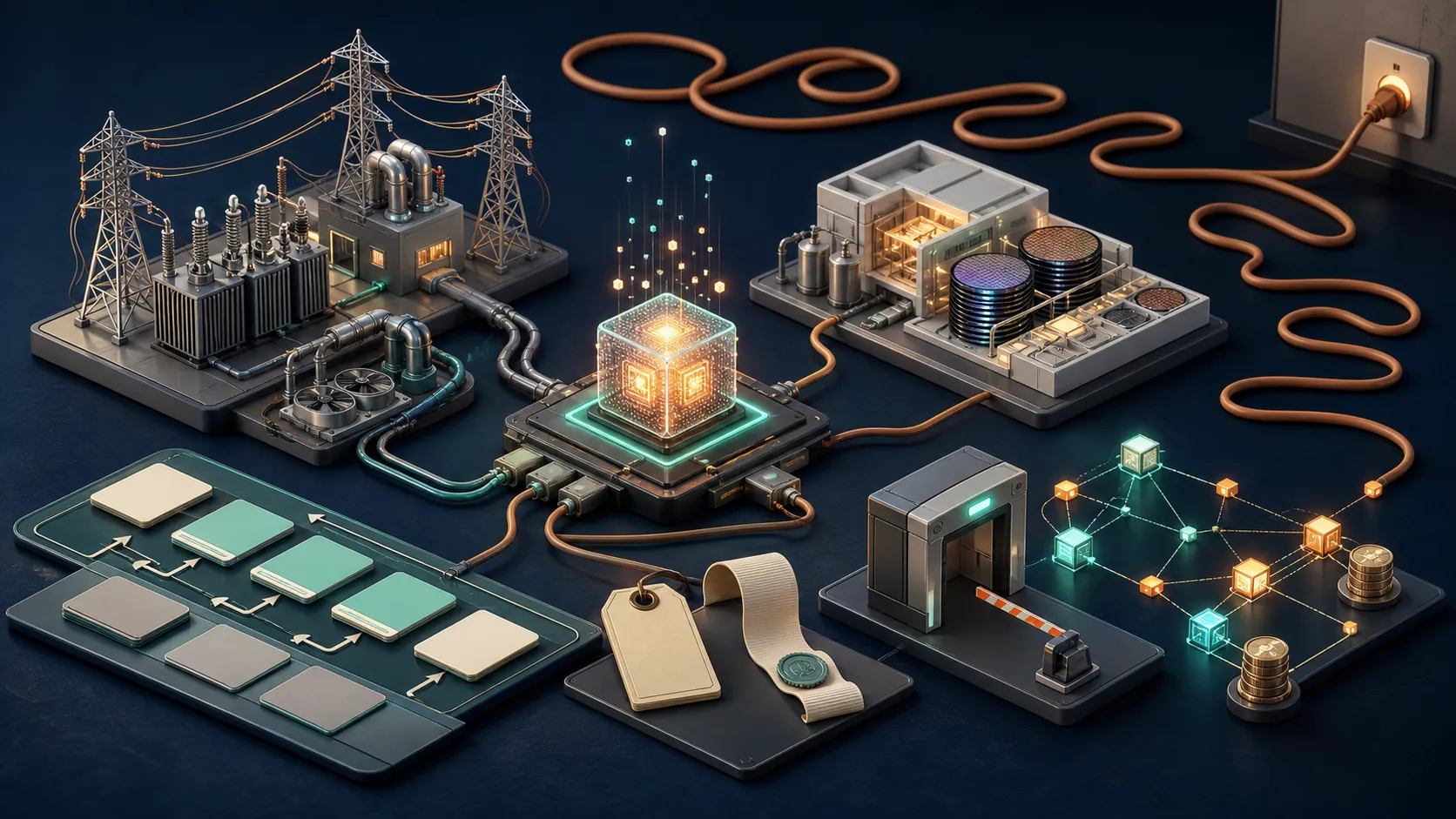
I reopened yesterday’s briefing and kept only the investment and economic threads. My first instinct was to draw one large arrow labeled “more AI spending.” That did not survive contact with the details. Power grids, chip fabs, SaaS results, and crypto legislation move at different speeds and carry different risks. One arrow turned the map into an instant-noodle packet, so I separated the ingredients.
My order of reading is simple: where the money goes, when it can produce results, and what is not yet settled.
1. AI capital is moving into power and fabs
Media reports said Nvidia could invest up to $3 billion in Lancium, the power-infrastructure developer behind the Texas Stargate campus. The investment is not a completed deal announced by the companies, so I treat the amount as reported talks, not as a settled fact.
The physical infrastructure is easier to verify. Lancium describes Stargate 1 in Abilene as its flagship campus and says it has a 1.2 GW grid interconnection approved by ERCOT. A GPU that cannot be powered and cooled is not productive compute; it is very expensive furniture. That is why generation, transmission, and cooling are moving from the supporting cast to the front row of the AI capital map.
SK hynix’s board approved KRW 35.2 trillion for Yongin Y2 and KRW 19.1 trillion for Cheongju M17, or KRW 54.3 trillion in total. The first cleanroom is targeted for June 2029 at Y2 and December 2028 at M17. Capital approved today does not turn into HBM or NAND tomorrow. Construction, tool installation, yield stabilization, and customer qualification still stand in line.
My reading is cautiously positive for long-term AI infrastructure demand, but the gap between a capital commitment and usable supply matters. I also keep the opposite risk on the page: if the memory cycle weakens, large new capacity can become a supply burden.
Sources: Lancium’s Abilene campus, SK hynix’s Y2 and M17 investment announcement
2. Workflow SaaS still has a place of its own
Atlassian reported fiscal 2026 fourth-quarter revenue of $1.766 billion, up 28% year over year. Cloud revenue reached $1.213 billion, up 31%. The company also said its MCP server and Teamwork Graph CLI had passed one million monthly active users.
Those figures do not prove that AI alone drove Atlassian’s results. Cloud migration, existing product demand, and pricing all sit inside the same report. They do suggest that a product such as Jira or Confluence, which already holds work history and permission relationships, has a useful place to insert AI without asking customers to move their jobs into a separate chat window.
When I look at an AI-enabled SaaS business, I now ask three questions:
- Does the AI live inside work the customer already performs?
- Does usage improve completion time or quality?
- Can the product connect existing data without widening access too far?
Monthly users are an attendance sheet. The homework grade lives elsewhere. Strong results and a cheap valuation are also two different claims.
Source: Atlassian’s official fiscal 2026 fourth-quarter results
3. Crypto legislation and enforcement keep different clocks
The US CLARITY Act aims to define when a digital asset is treated as a commodity or a security and how the SEC and CFTC divide their roles. It has passed the House, but Senate procedure and negotiations remain. It is not yet a law or an implementing rule.
Enforcement, however, is already moving. On August 7, the US Treasury’s OFAC sanctioned Iran-linked digital-asset exchanges including Shelbit and Aban Tether, along with related people. Treasury cited transactions between IRGC-owned addresses and Shelbit addresses, as well as Aban Tether’s dealings with already sanctioned Iranian exchanges.
I do not combine these two timelines:
- The bill is a possible future framework for the US market.
- Sanctions are a present operating risk that firms must address now.
- Hope for legal clarity does not remove compliance costs.
“Clearer regulation helps everyone” is convenient but too broad. It can create a moat for firms with registration, custody, and AML systems while raising costs and exit risk for firms that lack them.
Sources: Congressional Research Service overview of the CLARITY Act, Congress status for H.R. 3633, US Treasury sanctions announcement
The risk boundaries I wrote down
My working assumption is that AI infrastructure spending will continue and enterprises will keep placing AI inside existing workflows. Grid delays, memory oversupply, weaker IT budgets, or failed regulatory negotiations can break that assumption.
I therefore keep four columns beside every headline:
- Confirmation: report, board approval, bill, and active sanction are different states.
- Time: a spending announcement and revenue-producing capacity can be years apart.
- Outcome: usage, revenue, and cash flow are not interchangeable.
- Downside: cycle risk, compliance cost, and financing conditions belong in the same review.
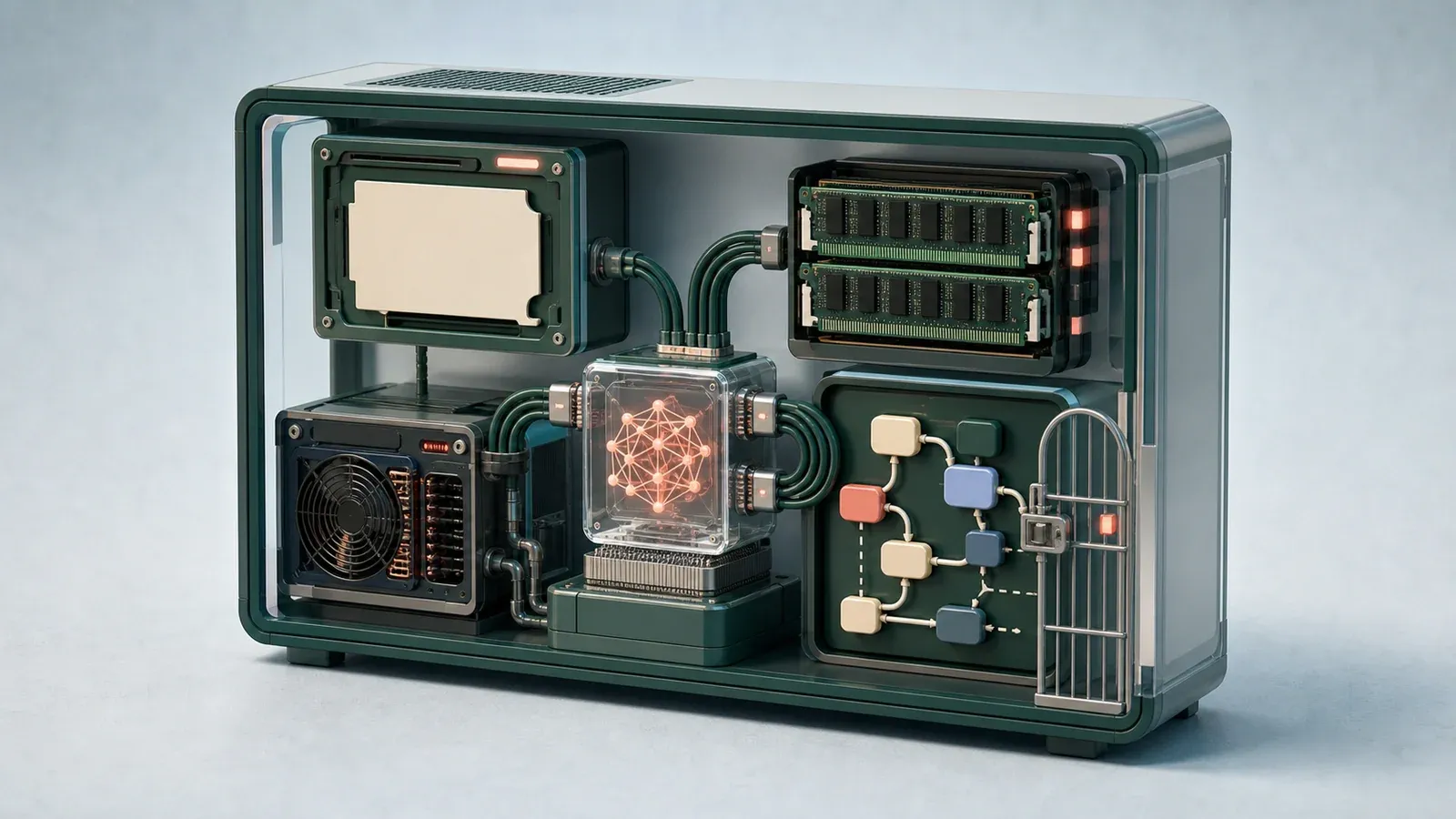
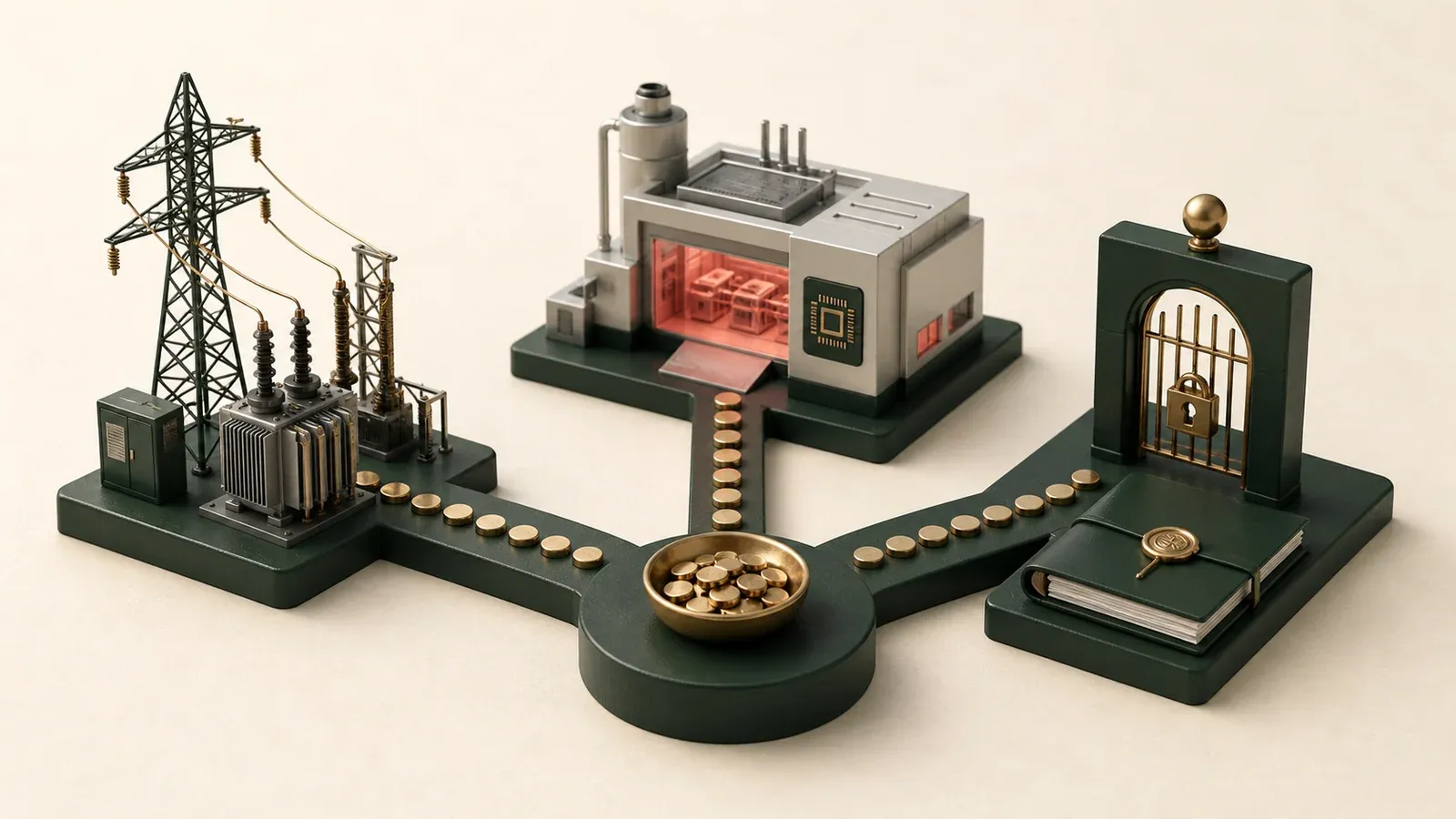
My conclusion is that AI money is no longer buying chips alone. It is paying for power, fabs, workflow data, and compliance systems. The opportunity set is wider, but the receipt is longer. I am trying not to mistake a longer receipt for a discount.
Every investment decision and its result remain the investor’s responsibility.
Leaving a reaction may store a random identifier in this browser to prevent duplicates.