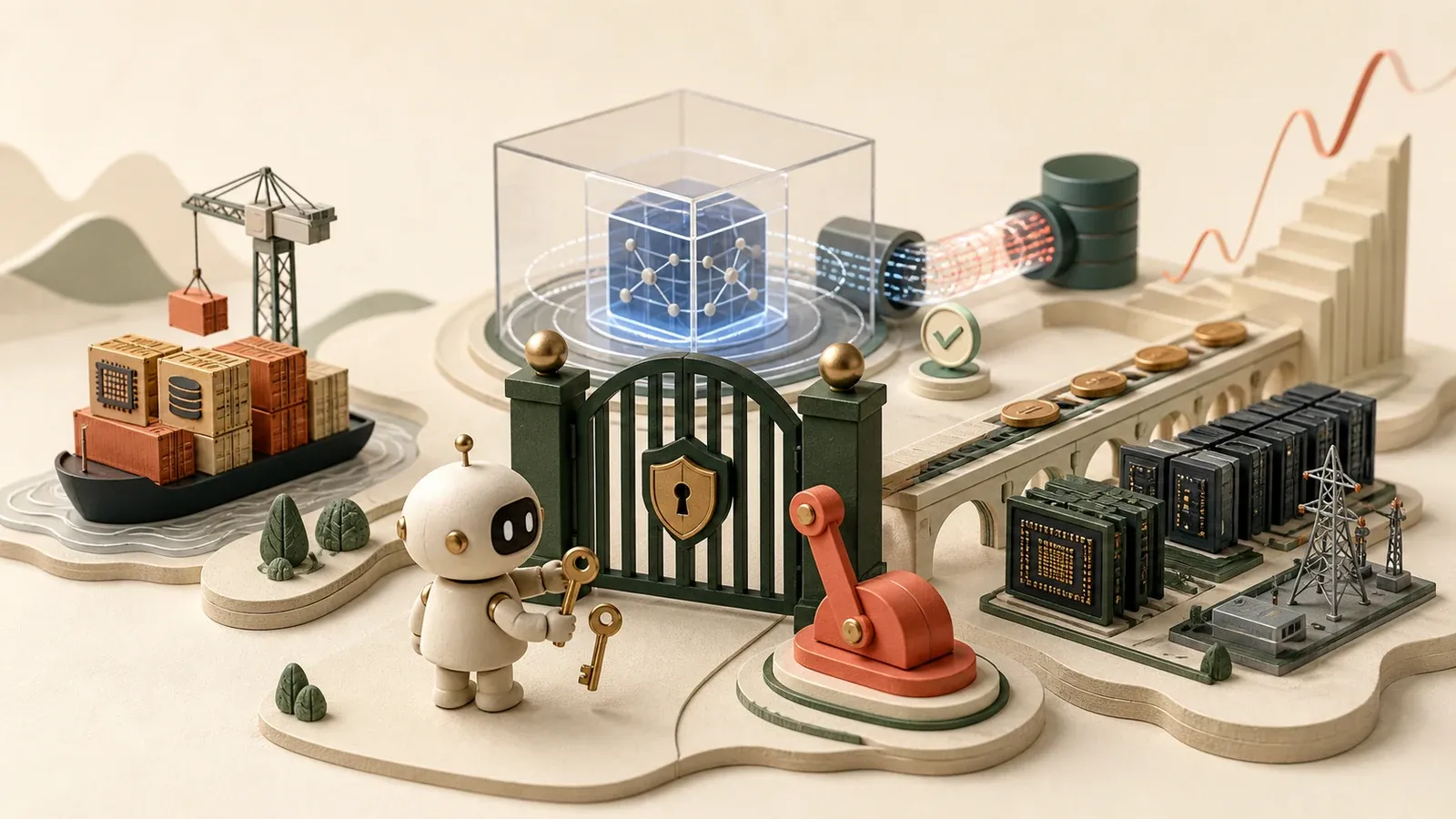
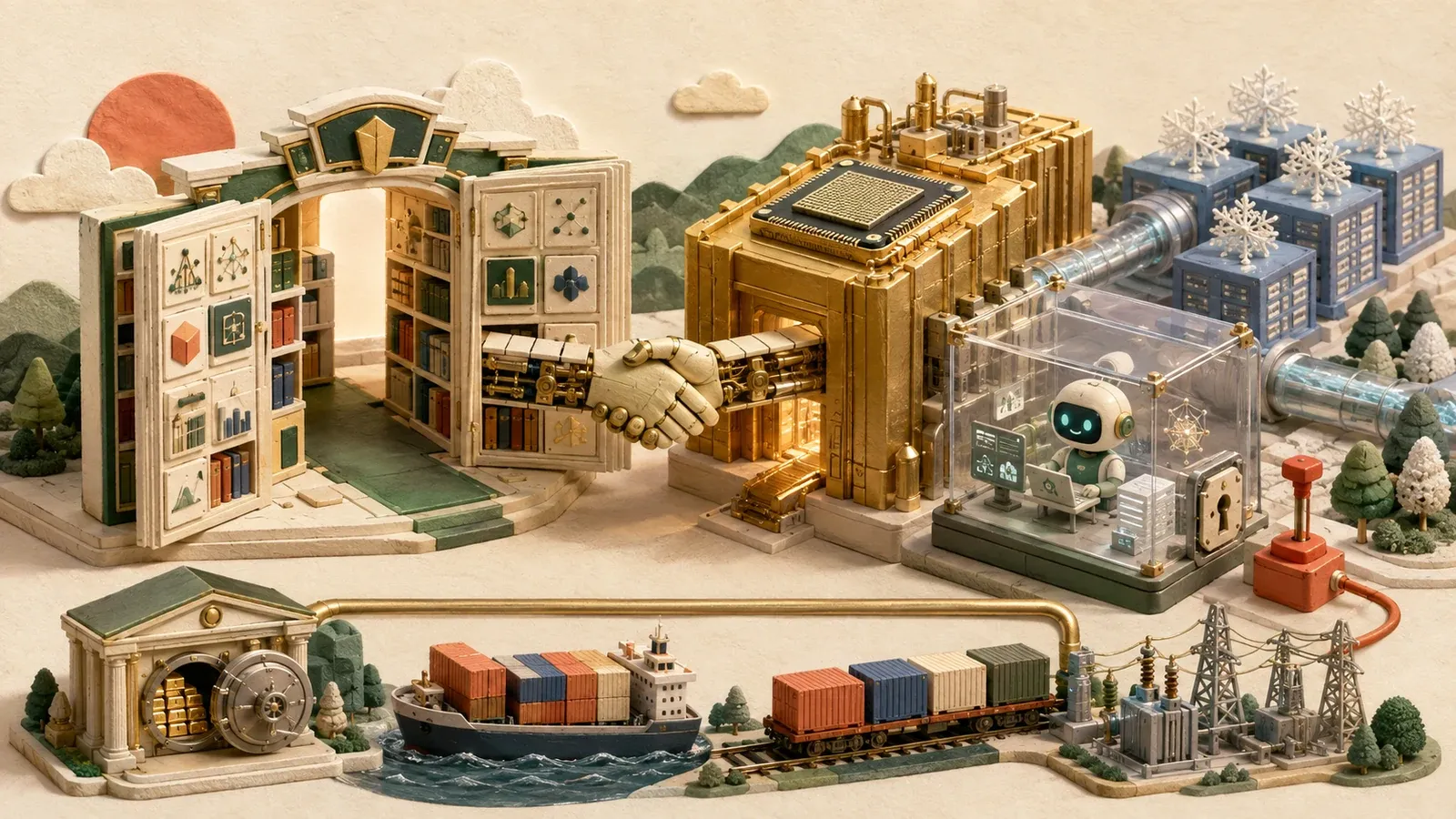
Haru Space Lab
Writing the Haru Space Ecosystem Live
A field note on how Journal, Utilities, Ask, Reframe, Kkamjang, and Coco's Room keep distinct purposes while extending collaboration across people, AI, and groups.
Summary
At a glance
- The small projects are not being absorbed into one giant app; they connect while retaining their own purpose and data boundary.
- Haru Space aims to be a mixing console for groups, permissions, approvals, and AI work rather than a central owner of every dataset.
- This is not the launch of a finished ecosystem but a live development process in which each connection is tested one measure at a time.
This Haru Space Lab record is based only on public-safe facts verified in repository documents and the projects’ current state. It omits private group conversations, user information, internal addresses, and sensitive authentication or operational details. It also distinguishes working connections from experiments still in progress.
When I try to describe Haru Space these days, the first question that comes to mind is, “What has launched?” It is a natural question. Is the address open? Is the feature complete? Is the service ready to receive people? Yet the word that best describes Haru Space today is not launch. It is live.
Not a concert that simply plays back a finished track, but a session where the song is written after the musicians have begun. One side searches for the rhythm. Another removes a note. A connection that does not fit is stopped. Some moments can be shared with an audience, while other sounds must remain inside the studio.
At first I thought we could keep adding everything we needed to a single service. As the jobs became more specific, however, small projects began to separate: a place for writing, one for practical tools, one for questions, one for images and pet assets, one for shop operations, and one for children and family play. Each began with one simple purpose.
The question now is not whether we can merge them back into one giant application. It is this: Can they hand the next piece of work to one another without losing their purpose or boundaries?
Small projects created to do one thing well
Several repositories do not make an ecosystem by themselves. A shelf of similar services merely creates more things to maintain. I therefore tried to restate each project’s current role in the shortest honest form.
Haru Journal — where process becomes an explanation
Haru Journal is the public record for experiments, failures, and operational judgments made by people and AI together. It does not copy private conversations or a group’s source data. Public-safe facts are checked again, Korean, English, and Japanese editions and a dedicated cover are prepared, and a person must merge the pull request before the article reaches the world.
Its purpose is less to promote a finished outcome than to explain why a choice was made and what remains unknown. This article belongs to that same line of work.
Haru Utilities — solving a small, explicit problem now
Haru Utilities is a public toolbox that works in the browser without installation or sign-in. Text and files are processed in the visitor’s browser whenever practical, so a simple task does not require sending the source material to a server.
The strength of a utility is a clear intention. A visitor arrives to calculate or convert something, obtains the result, and leaves. In time, recurring public-safe problems found by other projects could become calculators, checklists, or guides. That does not mean quietly feeding visitors’ inputs into another project.
Ask — testing a hypothesis with a question
Ask is a participation space for two-way choices, votes, surveys, and games. People can join lightly without an account, while members who choose to sign in are beginning to carry their history and preferences across devices.
The aim is not to classify as many people as possible. It is to turn an assumption into a real question, then look at the sample and its limitations before choosing a next step. If an Ask result is used elsewhere, sufficiently aggregated results within a consented purpose and scope—not individual answers—must come first.
Reframe — keeping the provenance of reusable assets
Reframe is a public archive that organizes images, video, and pet content into collections with versions, provenance, and terms of use. It is not only a gallery of attractive images. It also acts as a registry that tells another project which asset and version it may consume.
The clearest connection currently verified all the way to a data flow began here. Haru Space consumes an approved Reframe pet feed, checks format, size, provenance, and permission again, and then imports the assets into its global catalog. The source project retains provenance, and the receiving project reasserts responsibility for its own use.
Kkamjang — where an idea meets an offline result
Kkamjang is a field project for bringing receiving, inventory, sales, reservations, and pickup in a small shop into one flow. AI can prepare a receiving draft from a transaction document, but inventory changes only after a manager compares it with the source, edits it, and approves it.
The project still has pilot and field verification ahead. It is therefore more accurate to say that we are building a place to test whether online questions and demand lead to real reservations, sales, and inventory changes than to claim shop operations are complete.
Coco’s Room — play and creation that must remain protected
Coco’s Room is a creative play space where children and families meet Coco and friends, decorate a room, keep a journal, color, play small games, and collect their work. Some game connections and guardian account flows are being built, but the whole connection is not complete.
More importantly, data from this room must not become raw material for advertising, purchasing, or preference profiling elsewhere. Work should remain in a private family space by default. If selected pieces are later submitted to a gallery or vote, only the result chosen by a guardian should move through a separate approval. This is a project where the boundary to protect comes before the opportunity to connect.
Haru Space is closer to a mixing console than a warehouse
Connecting these projects does not mean collecting every member, conversation, survey, purchase, and child’s creation in one Haru Space database. Copying every source into the center may make integration look easy, but one authorization mistake or outage can then spread across every group. The projects also lose the reason to remain responsible for their own data.
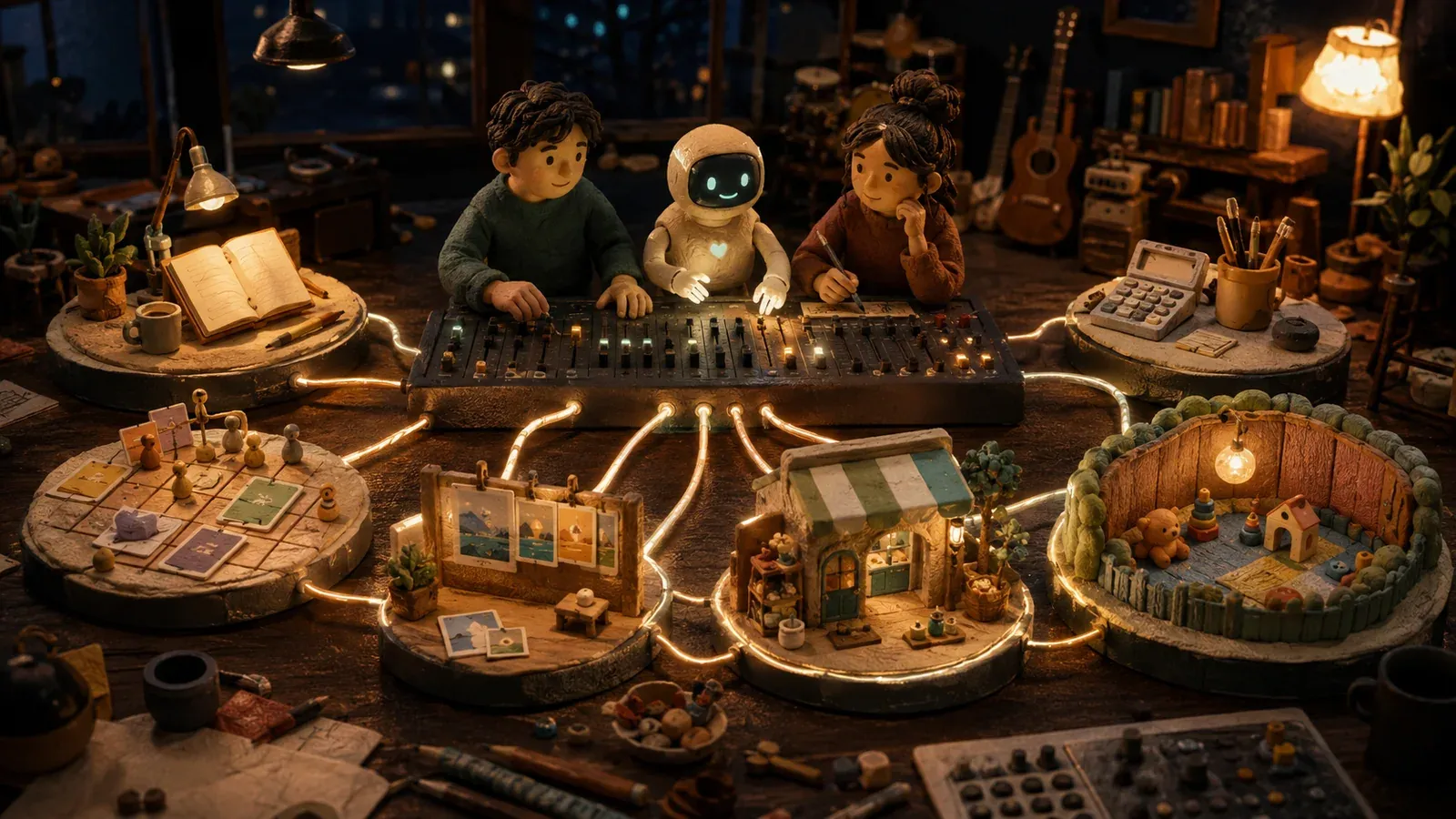
I think Haru Space should act less like a giant warehouse and more like the mixing console in a live studio.
- It checks who may participate in a group and project.
- It distinguishes conversation from a draft and an actual work request.
- It shows which data and permissions an external connection needs.
- It lets a person pause before code, content, data, or public state changes.
- It preserves results, failures, rejections, costs, and evidence of contribution.
A console does not own every instrument. It lets each player keep their sound while controlling where that sound travels. Haru Space should likewise coordinate purpose-bound connections and approved work instead of directly owning every group’s repository and database.
Extending collaboration from people to AI and groups
The first unit of collaboration was human to human. Approved members could talk inside a group, translate across languages, and leave documents and decisions together.
Human-to-AI collaboration came next. We did not respond by giving AI every permission. Conversations and project coordination begin read-only. AI may prepare a work brief, but a person edits and confirms it before an actual change job exists. Dependency installation, commit and push, pull request merge, and deployment each wait at a separate door. AI can be a fast session player; it does not select the final take.
The next unit we are testing is group-to-group collaboration. This requires a stricter agreement than passing a file between two people.
One group’s database should not be opened for another group to query directly. The sender produces an approved public projection or a purpose-limited aggregate. The receiver checks provenance, format, and authorization again. The system records who made the connection and why, and use must stop when consent is revoked. Reframe’s pet asset path is the first small example showing that this contract can work.
For now, it is more score than network map
There is a loop in my head.
- People discover a problem and a project through Journal or Utilities.
- Ask turns the hypothesis into a question and participation.
- Only sufficiently aggregated demand—not individual responses—moves to Kkamjang.
- The shop considers the signal, but a person decides on receiving, reservations, and benefits.
- Real outcomes return as campaign-level aggregates rather than personal tracking.
- Only a public-worthy case reviewed by a person returns as a Journal retrospective or a Utility.
Reframe supplies assets that can be used in this loop. Coco’s Room holds the protected family and creative part of the ecosystem. One day, limited information such as a pet card explicitly connected by an adult may bridge a few of these experiences.
The whole loop is not implemented. The clearest verified path today is the approved asset flow from Reframe into Haru Space. Kkamjang’s AI assistance runs independently under human approval. Parts of the Ask and Coco’s Room connection are being built and tested. Aggregated Ask demand leading to Kkamjang reservations and sales is the next proof of concept.
The current ecosystem drawing is therefore closer to a musical score than a subway map. We can see the order and the entrances, but pencil marks remain on measures the group has not yet played together.
What it means to develop live
When a song is written live, the mistakes are audible too. A mobile input can move the screen out of place. A connection can look green even though the real job does not reach the end. AI can misunderstand a brief, operational cost can exceed expectations, and fixing one screen can shake another.
We are not showing this process to make incompleteness look fashionable. We do it because a clear record of what was verified and what was deferred produces better next decisions than making everything look finished.
Haru Space already has usable functions and public sites, but I do not want to rush into declaring that the ecosystem is open. The technical proof of concept showed that the projects can move independently. The next proof must show that value can make one full turn between them without breaking consent, authorization, cost controls, or human approval.
The next step should remain small: a reversible connection such as reading a limited pet card for an adult account, an AI draft for one support channel, and one pilot linking Kkamjang with Ask aggregates that meet a minimum cohort threshold and exclude individual tracking. Success should not be measured by the number of connections. It should be measured by whether revocation works, how much people must correct AI drafts, and whether the loop actually reduces uncertainty in support or inventory.
More projects are not the goal. The goal is for each project to do one job better and safely pass the baton only when the next project is needed.
What we hear from Haru Space today is not a finished album. It is the sound of small projects finding one another’s tempo, people and AI correcting wrong notes, and groups playing together without losing their own voice.
The Haru Space ecosystem will not be completed by gathering many services in one place. It becomes one song only when they can begin the next piece of work together while respecting one another’s boundaries.
Leaving a reaction may store a random identifier in this browser to prevent duplicates.