As AI Enters the Physical World, Infrastructure Risks Grow – October 12 Daily Briefing
A plain-language look at the reported Amazon–Decart talks, Yandex data-center outages, World Bank crisis-aid discussions, and disruption at Riyadh airport.
Summary
At a glance
- Amazon is reportedly discussing a roughly $7 billion acquisition of Decart, but Reuters could not independently confirm the talks.
- Three Yandex data centers were attacked within days; some operations shut down while damage to AI supercomputers remains unconfirmed.
- The World Bank is speaking with 30–40 countries; up to $100 billion is a conditional capacity estimate, not committed aid.
- Reports differ on whether 12 or 13 people died in the Riyadh airport attack; more than 300 were injured.
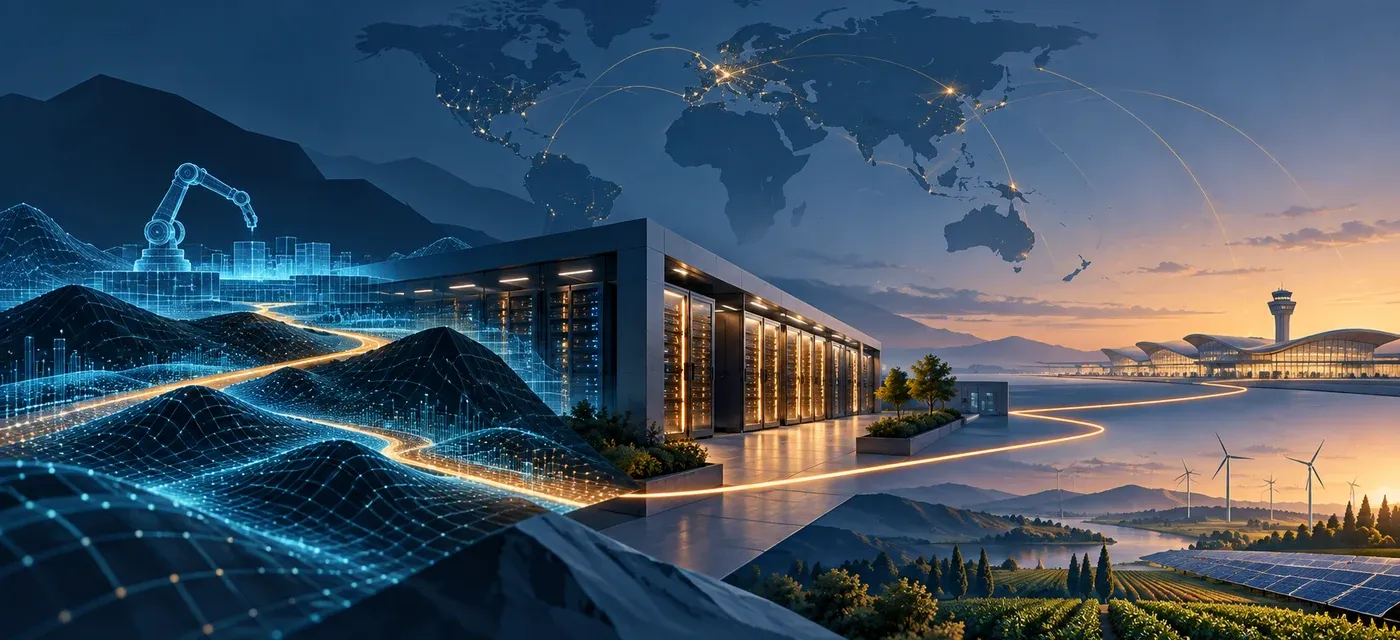
These four stories point to a simple connection: technology and the economy do not live only on screens. AI can learn in simulated worlds, while the data centers running it depend on real buildings and power. Fuel and fertilizer costs, or a closed airport, can also become real costs for people and businesses. The acquisition remains unconfirmed, the World Bank’s figures describe possible capacity, and reports disagree on the airport death toll.
Information cutoff: October 12, 2026, morning Korea time. I am not repeating yesterday’s coverage of the reported Nvidia–Reflection AI discussions, GitHub Copilot’s enterprise settings, or UNCTAD’s global growth outlook. Today’s items are new reporting on a possible acquisition, data-center outages, World Bank crisis-aid discussions, and airport disruption.
1. Amazon reportedly in talks to acquire Decart, a step toward AI-generated worlds
The Wall Street Journal reported on October 11 that Amazon was discussing an acquisition of AI startup Decart for about $7 billion. Reuters said it could not independently verify the report, and neither company commented, so no deal or price is confirmed. According to Reuters, Decart raised $300 million in May at a valuation of about $4 billion, with Nvidia among the investors. Lucy is described as a real-time video-editing model; Oasis generates virtual environments for training and testing robotics or autonomous-driving systems. Reuters report, Decart’s Oasis overview
What interests me is the possible move from AI that produces text or video to AI that lets a system test the consequences of its actions. A robot or self-driving car cannot safely repeat every rare situation on real equipment and roads. Simulated environments could let developers test many cases at lower cost and risk. But if a virtual world misses friction, weight, or sensor errors, success in simulation does not guarantee success in reality.
If the reported talks are real, Amazon’s cloud and logistics operations could offer a place to explore that connection. That is my strategic inference, not a known deal term. With a reported value above Decart’s May valuation, I would watch not only whether talks become an agreement but whether the technology attracts recurring customer use and revenue.
2. Three Yandex data centers hit in days: AI still depends on physical sites
Yandex said its Sasovo data center was badly damaged in a drone attack on the night of October 7–8 and shut down completely. A facility in Kaluga was attacked on October 9, taking part of its infrastructure out of service. On October 11, Yandex said operations at its Vladimir data center had been suspended entirely. Reports say Sasovo houses two of the three supercomputers Yandex uses for AI development, but public information does not establish whether the machines themselves were damaged. Yandex advised customers to activate their disaster-recovery plans. Yandex notice, Al Jazeera report
Recovery is not just a matter of putting another server in another building. AI training depends on the state of many GPUs, model checkpoints, training data, and configuration. A checkpoint is a saved restart point in a long computation. If it exists only at the affected site, restoring hardware may still mean repeating a large part of the training. It has not been confirmed whether AI training stopped or whether the supercomputers were damaged.
I see this as a reason to test geographically separate backups, recovery drills, and the ability to move workloads to other hardware—not as proof that AI development has halted. A backup that has never been restored is not yet a proven recovery plan.
3. World Bank discusses crisis support with 30–40 countries—not a $100 billion payout
World Bank President Ajay Banga told Reuters on October 11 that the Bank was discussing possible crisis aid with 30–40 countries facing energy-price and cost-of-living pressure after the Middle East conflict. The initial emergency window was $25 billion. Banga said that, together with $35 billion that could be made available by redirecting resources from approved projects, the total usable amount could be around $50–60 billion. If conditions worsened, the Bank could potentially make up to $100 billion available. These are possible resources, not money already assigned to countries. The Bank estimates developing countries owe external creditors about $400 billion in 2026, with interest making up roughly one-third. Reuters interview report
An energy shock does not stop at the gas pump. More expensive diesel can raise shipping and farm-equipment costs; fertilizer prices can affect food costs later in the growing cycle. If dollar-denominated debt also becomes harder to service, countries with little foreign-currency or fiscal room can feel the same shock more sharply. Still, talks with 30–40 countries do not mean that all have requested emergency money or are on the brink of crisis. Banga also said relatively few countries had initially sought funding.
I would not summarize this as “the World Bank has released $100 billion.” What is known is that discussions have started and the Bank is considering how much it could mobilize if pressure intensifies. Which countries apply, on what terms, and with what energy dependence and foreign-currency debt will matter more than the headline ceiling.
4. Riyadh airport attacked again: disruption becomes an operational cost
An Associated Press report citing Saudi authorities said an attack on King Khalid International Airport in Riyadh on October 10 killed 12 people and injured more than 300. A Reuters report the next day gave a death toll of 13, so the reported counts do not match. Reuters said Yemen’s Houthi movement claimed responsibility for Saturday’s attack. It also reported that an unidentified projectile caused a fire at an airport terminal on October 11 and injured people. The airport had been closed after Saturday’s attack. AP report, Reuters report
A prolonged closure can mean diverted flights, delayed cargo, difficult reopening decisions, and the need to account for passengers and staff. At this morning’s cutoff, there is not enough evidence to estimate the effect on global logistics or a particular company’s earnings. I would not infer a direction for aviation or defense stocks from this event alone. Service operators should also plan for disruptions beyond their own data centers: airports, telecom networks, power, and carriers can all interrupt the customer experience.
What I’m taking away
Read together, the stories suggest that the more AI tries to understand and act in the physical world, the more physical constraints matter. The Decart report points to virtual environments as a potential training tool, but the talks are unconfirmed. Yandex’s outages show how data centers depend on real locations, but damage to its AI supercomputers has not been established. The World Bank’s figures describe possible capacity, not committed aid, and reports still differ on the airport death toll.
The next things I would check are whether Amazon and Decart reach an agreement, how Yandex restores its sites and services, which countries request support and on what terms, and when airport operations can safely resume. A headline may point to a direction; execution and recovery determine what it ultimately means.
This is a record for understanding technology and market developments, not a recommendation to buy or sell any asset. Uncertain claims are separated from confirmed information. Investment decisions and responsibility remain with each reader.
Leaving a reaction may store a random identifier in this browser to prevent duplicates.