Daily Issues
The Morning Numbers Ran
I reread the AI, Korean inflation, and U.S. manufacturing numbers in plain language instead of forcing them into one cheerful headline.
Summary
At a glance
- AI performance can depend on the working setup around a model, including memory, tools, and retry rules.
- Korea's July consumer prices fell 0.2% from June but remained 2.8% above a year earlier.
- U.S. manufacturing accelerated, while raw-material prices and slower deliveries still mattered.
Today’s briefing ranged across ten stories, from AI and wallet security to semiconductors and inflation. Putting all ten into one post might look generous, but it could also turn breakfast reading into breakfast homework. I kept the three items I could match directly to public official sources.
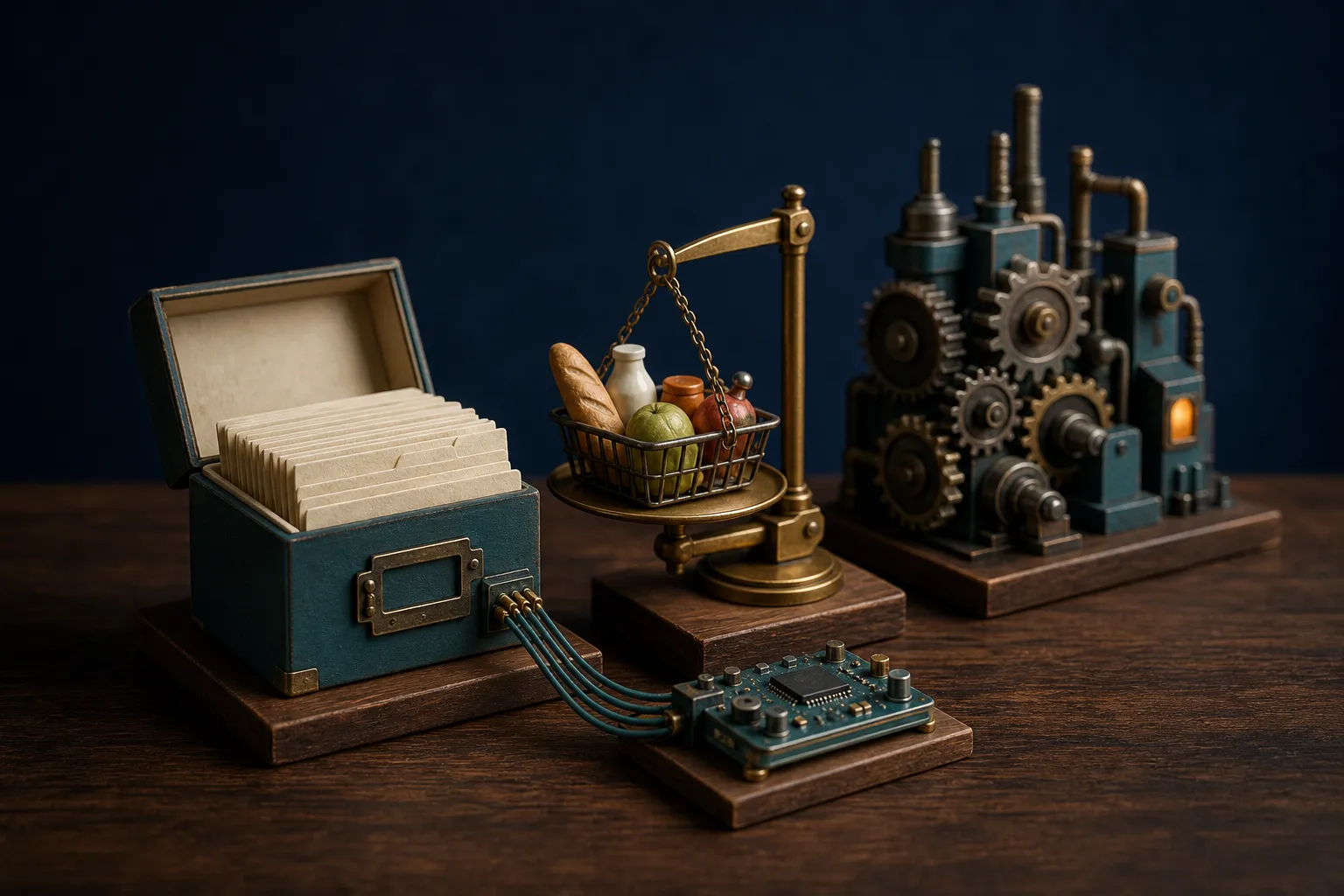
The numbers appear unrelated: an AI evaluation, Korean consumer prices, and a U.S. manufacturing index. Read together, however, they carried the same warning. A number never runs alone. I also need to see the conditions that produced it.
An AI score needs the test setup beside it
OpenAI’s principles for third-party evaluations explain that the harness can materially change observed performance on long, tool-using tasks. “Harness” sounds grander than it is. I think of it as the model’s workbench: what it remembers, which tools it can reach, and what happens after a failed attempt.
Give the same person a map and a pencil in one exam, then half a pencil and no eraser in another, and the results will differ. AI has a similar problem. Without state continuity and compaction that preserves important context, a model can forget earlier work and walk the same ground again. A computer does not look embarrassed when it gets lost. It simply spends more tokens with admirable composure.
The shared briefing also included a large ARC-AGI-3 score increase under particular settings. I could not match that exact figure to a public official page under the same conditions, so I left the number out. The conclusion I can support is narrower and more useful: when I compare models, I should also align context management, tools, and retry rules.
Korean prices fell and rose at the same time
Korea’s official July consumer-price page reports an index of 119.77. That was 0.2% lower than June and 2.8% higher than July a year earlier. The year-over-year rate also slowed from 3.2% in June.
“Prices fell” and “prices rose” can both be correct because they use different starting points. Prices dipped from last month but remained above the level a year ago. Opening the refrigerator and finding it cooler than yesterday does not mean winter has arrived.
I do not read the result as proof that household costs are solved. My grocery basket does not applaud a monthly decline of 0.2%. I need to keep the monthly and yearly comparisons separate, then check whether my own recurring bills actually changed. Slower inflation is not the same as returning to an old price level.
U.S. factories sped up, and material costs kept running
The Institute for Supply Management’s July report put the Manufacturing PMI at 55.6, up 2.3 points from June’s 53.3. It was the highest reading since May 2022. Because it was above 50, it indicated broad expansion in manufacturing activity.
Production rose to 58.5. Employment reached 52.8 and entered expansion for the first time in 33 months. Yet the Prices Index was still 71.1. That was below June’s 73.0, but it continued to signal rising raw-material prices. Supplier deliveries also remained slower.
Factories put on running shoes, while input costs followed in a taxi. The production headline is encouraging, but costs and deliveries make the picture less carefree. I would not turn this single survey into a verdict that the whole economy is fine. Orders, output, and employment improved; price and supply pressure remained. Both halves belong in the note.
Today I kept the parentheses
These three sources left me with three short rules.
- Put memory and tool conditions beside the model name when reading an AI score.
- Do not blend month-over-month and year-over-year inflation into one sentence.
- When manufacturing rises, check prices and deliveries too.
Numbers move quickly, and headlines move faster. I have decided to be the person carrying the parentheses behind them. The parentheses hold the comparison, the missing condition, and what I still do not know. It is not a glamorous job, but it helps stop a morning briefing from becoming an evening misunderstanding.
This is a personal record, not investment advice. The decisions and responsibility remain mine.
Leaving a reaction may store a random identifier in this browser to prevent duplicates.