The Day AI Capacity Got a Price Tag
A look at Oracle's AI infrastructure expansion, long-term memory demand, and the financial risks surrounding the AI investment cycle.

Summary
At a glance
- Oracle is expanding next-generation AI infrastructure while broadening accelerator choices.
- Long-term DRAM and HBM demand is making future capacity increasingly visible.
- The Bank of Korea is examining how AI investment shocks could spread through finance and semiconductors.
This is my daily record of news I found worth following, rewritten in language I can revisit later. Investment comments are personal views on market structure, not trading recommendations.
Information cutoff: afternoon of October 28, 2026, Korea time
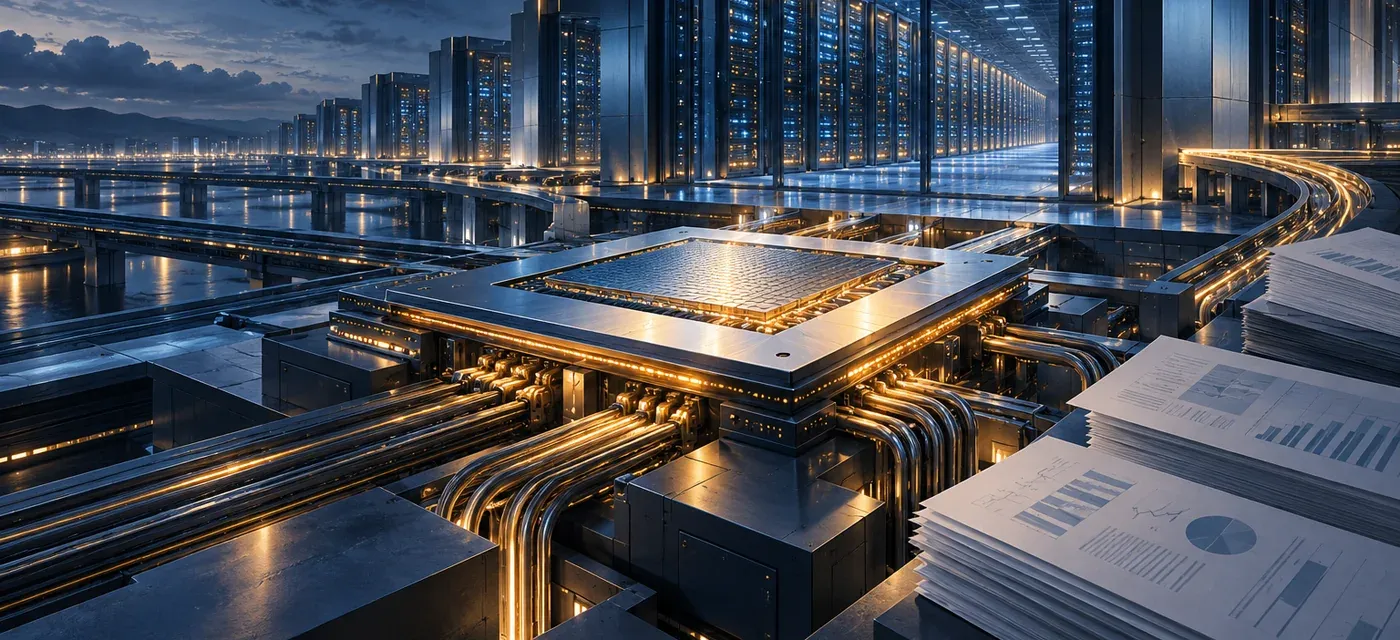
What stood out to me today was not simply the size of AI spending, but how far into the future capacity and contracts are being committed. Expectations are increasingly becoming physical commitments in data centers, memory production, power and financing.
Oracle is expanding NVIDIA while adding alternatives
Reuters reported that Oracle is expanding next-generation NVIDIA Vera Rubin systems in OCI at multi-gigawatt scale while also broadening accelerator choices with Google TPU, Cerebras and SambaNova offerings.
The more interesting signal is the diversification. Large-scale training still benefits from the CUDA ecosystem and tightly integrated clusters, while inference can favor different hardware depending on latency, cost and model structure. As the AI compute market grows, it is becoming more segmented rather than more uniform.
For developers, this means architecture increasingly includes accelerator routing and cost measurement, not only cloud selection.
Memory demand is becoming a multi-year capacity question
SK hynix has paired record performance with stronger visibility into long-term DRAM and HBM demand. AI servers require more than GPUs: memory, advanced packaging, networking and power must scale together.
I find the forward capacity signal more important than a single quarter’s profit. Long contracts improve visibility, but they do not eliminate risk. If customers monetize AI more slowly than expected, that risk can return through contract adjustments and financing pressure.
The Bank of Korea is looking at the reverse transmission path
The Bank of Korea has examined how borrowing, special-purpose financing and interconnected transactions around AI investment could transmit a slowdown into financial markets and Korea’s semiconductor industry.
The technical chain of models → cloud → accelerators → memory → data centers now has a financial layer of loans, leases and long-term purchase agreements. The same connections that amplify growth can transmit stress when the cycle reverses.
My takeaway
AI investment is moving beyond expectations. Servers are ordered, power is reserved, memory capacity is allocated and financing structures are built around those commitments.
That changes what I want to watch. Alongside model benchmarks, I will pay more attention to hyperscaler CAPEX, long-term purchase commitments, HBM capacity, financing costs and cash flow. Evidence of strong demand is increasing, but so is the amount of capital required to sustain it.
References
- Reuters, October 27, 2026: Oracle expansion of NVIDIA Vera Rubin systems and accelerator choices
- Public disclosures and reporting on SK hynix third-quarter 2026 performance
- Bank of Korea analysis and reporting on AI investment and financial-market transmission
Leaving a reaction may store a random identifier in this browser to prevent duplicates.